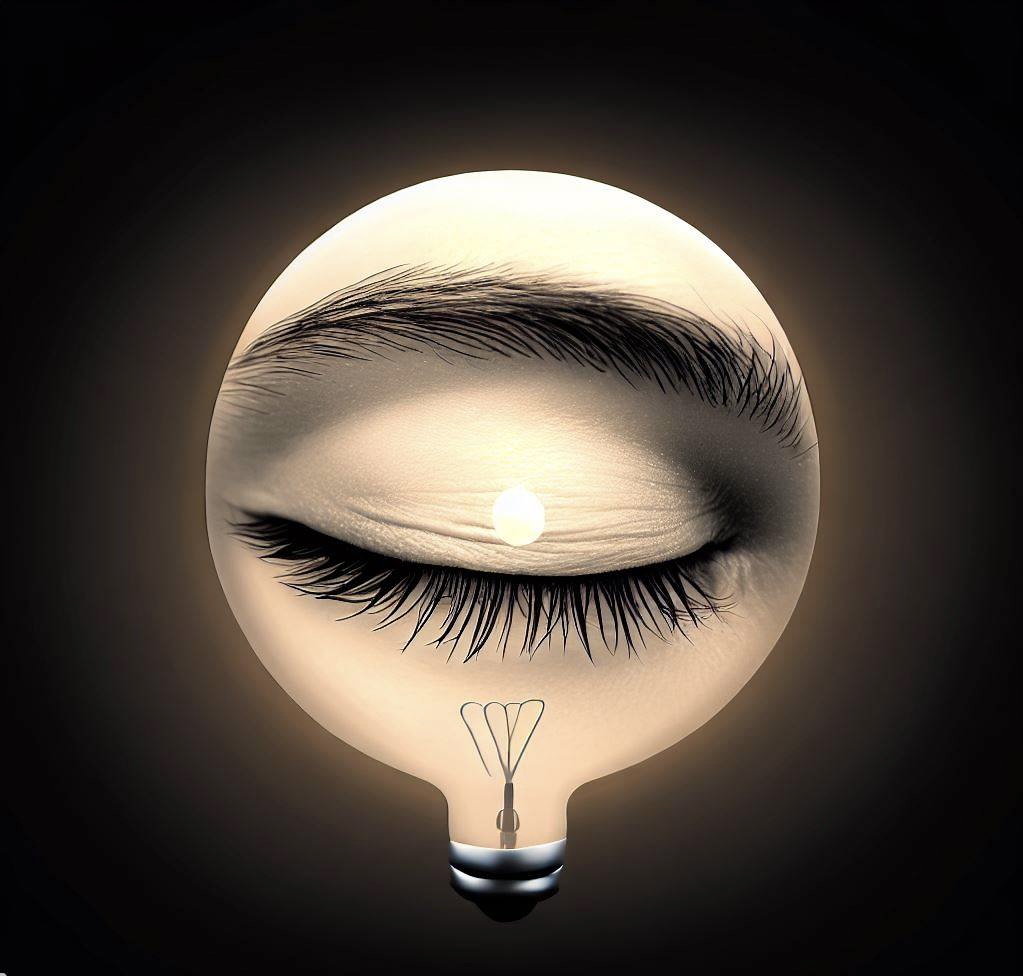
There is something fishy about perfect things. There are hotel rooms that are so perfect you almost feel uncomfortable. Everything is white, straight, quiet and polished. The pillows lie as if they had been raised in the military. Not a grain of dust is visible. Not a scratch. Not a trace of life. And yet sometimes you feel nothing. Then you walk through a worn Italian village where the facades are peeling a little, where the stones in the square are worn by thousands of steps and where the laundry hangs between the houses as if the aesthetics have completely given up control. Some old man sits on a plastic chair and talks loudly to someone through a window. It smells of coffee, dust and history. And suddenly everything feels beautiful. Not even though it’s worn. But because of it.
It’s really strange. We live in a time where a lot is about optimizing surfaces, polishing facades and creating the new, clean and efficient. Yet time and time again people seem to be drawn to that which bears traces of life. Something in us trusts what survived more than what just left the factory.
The ugly is sometimes more harmonious than the perfect
Here is an important difference that is often missed. Ugliness is not always about wear and tear. And beauty isn’t always about perfection.
An old house with cracks and distortions can feel more beautiful than a new glass house with bad proportions. A worn wooden chair can feel more right than a new piece of plastic furniture, even though the old one should really be considered “worse”. This is because humans do not only react on the surface. We react to rhythm, balance, materiality and history. Pleasant proportions have a strange power over us. Nature works like that. Old cities that have grown organically often gain a human scale that modern environments sometimes lose. Small distortions and unevenness make something feel alive instead of industrially perfect.
It’s a bit like the difference between a person who smiles spontaneously and a person who has practiced a sales smile in front of the mirror. One feels human. The other feels produced.
When the crack becomes the most beautiful thing
In Japan there is the traditional art of kintsugi where broken pottery is repaired with lacquer mixed with gold powder. The cracks are therefore not hidden. They are highlighted. What is broken does not become less valuable after repair, but more unique and often more beautiful than before. It’s an almost provocative thought in a throwaway culture. Because we have gotten used to the fact that the new is the desirable thing. We replace instead of repair. We hide injuries instead of integrating them into the story. But people rarely function so emotionally.
An old face full of lines can carry more beauty than a perfectly filtered portrait. A windswept tree that has survived a hundred storms can feel more powerful than a newly planted park alley where each branch stands like a diagram of municipal order. There is something in resilience that makes things beautiful.
Materials carry memories
This is also why an old leather bag sometimes feels more beautiful than a new polyester product that is technically superior in almost every way. The leather ages together with the person. It gets marks, softens and changes. It begins to bear history. Polyester often remains just… material. The same goes for many older items. A kitchen table full of small scratches can feel safe and alive. An old toy in the hands of a new child can carry a kind of warmth that no newly produced screen can quite manage to create.
It’s not just about nostalgia. It’s about relationship. We attach feelings to things that seem to have lived.
We often confuse new with valuable
There is also a larger system issue here. Modern economic systems are often built around constant renewal. The new drives consumption. The blank indicates status. The fast signals success. The problem is only that man’s deeper experience of meaning does not always follow the same logic.
Many people intuitively feel more calm in old city centers than in sterile shopping centers. Many people value handmade items more than perfect mass-produced items even though the latter are more accurate. That doesn’t mean development is wrong. But that means we sometimes optimize the wrong things.
Creativity is often about seeing potential where others see trash
Here the role of creativity becomes very interesting. A creative person doesn’t just see what something is. It sees what something could be. Old factories become cultural centers. Worn wooden planks become furniture. Rusty industrial environments become restaurants and meeting places. Old stories get new life through new generations.
It is actually the same mechanism as in kintsugi. You are not trying to erase history. It is built on. And that is often where the most interesting creativity arises. Not by starting from scratch but by reinterpreting what already exists.
The human often likes the uneven
There is also something important here about communication and storytelling. We live in an age where a lot of content is polished until it almost loses its humanity. Voices are autotuned. Images are filtered. Presentations are streamlined. But that humans often remember, it is rough. That person with a hoarse voice who told something genuine. That old teacher who spoke a little slowly but got the whole room to listen. That documentary that felt raw and real instead of perfectly produced. Perfection can impress. But humanity touches.
The creative process also needs the unfinished
This affects creativity more than we think. Many ideas die prematurely because people try to make them perfect right away. Everything should look professional before it even goes live. But creativity is often quite ugly in the beginning. Sketches are messy. Prototypes look strange. The first version of something new rarely feels elegant. If you don’t accept the unfinished, you’ll never arrive at anything truly interesting either.
This also applies to organisations. Companies that only allow polished ideas often get very little innovation. Because people don’t dare show half-baked thoughts. And almost all great ideas start as something a little strange.
The worn reminds us of time
Maybe that’s also why we like old things. They remind us that time exists. A worn wooden floor tells us that people have walked there before us. An old face tells you that someone has lived a whole life. A windswept tree tells us that storms can be survived. There is something comforting in that. In a world where everything goes fast and everything has to be updated, the worn becomes almost an act of resistance. It says that value is not just about novelty. It’s about relationship, survival and meaning.
Maybe we miss the mark when we stare too much at the surface
Perhaps the most interesting thing is that this is not just about aesthetics. It’s about how we think in general. We are often blinded by what is easy to measure and display. The new. The efficient. The perfect. It polished. At the same time, we sometimes miss what actually makes people feel something. The human. The lived. The crooked. That which bears traces of struggle and time.
Maybe that’s why some places, people and objects feel beautiful long after they’ve stopped being perfect. Because beauty is sometimes less in the surface and more in the story. And maybe the same goes for creativity.
The most valuable thing is not always the thing that looks the most impressive from the start.
Sometimes it is precisely that crack that allows the light to enter.