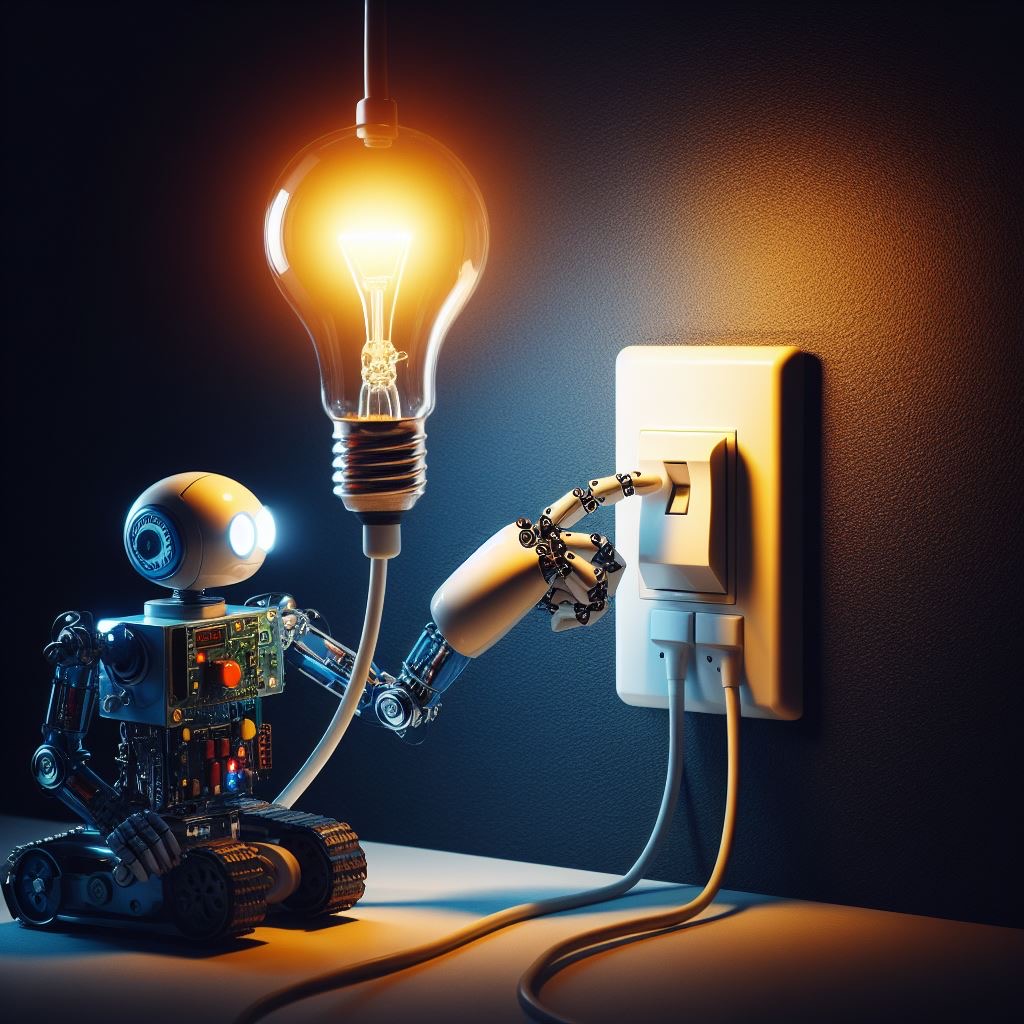
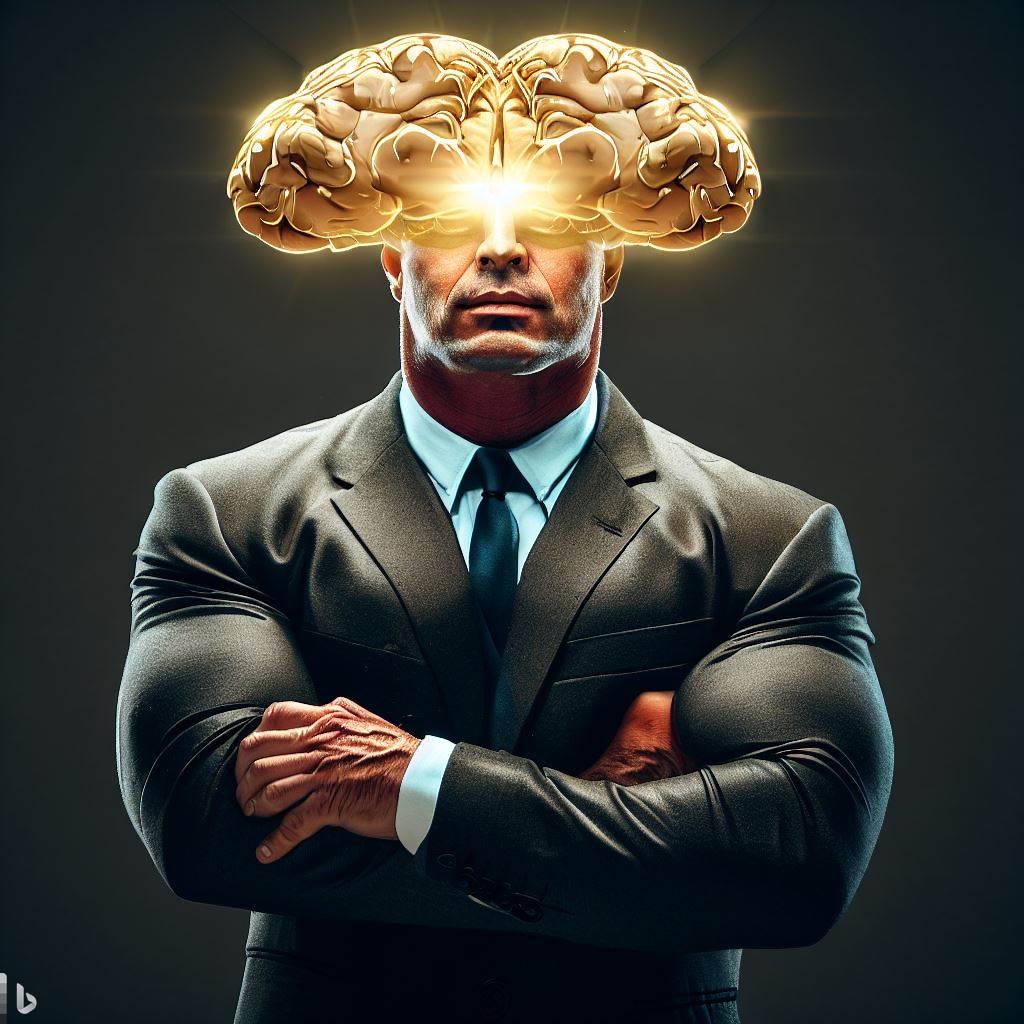
Imagine a factory where everything works perfectly. The processes are optimized, waste is eliminated, and every step is carefully improved over time. The results are stable, the quality is high, and the efficiency is impressive. And yet something starts to rub. Someone asks an uncomfortable question. What if we are doing the wrong thing, but very effectively. What if we have optimized ourselves away from the future.
This is where the tension between lean and creativity becomes clear. Not as opposites, but as two different ways of approaching change.
Lean as creative improvement
Lean, with its roots in Toyota and what is often called the Toyota Production System, is fundamentally about continuous improvement. The Japanese concept of kaizen captures this idea well. Small steps, continuous development, and a focus on eliminating waste. But what is often forgotten is that lean is also a form of creativity. It is improvement creativity. You have a direction, often a fairly clear vision of what is better, and you work systematically towards it. Creativity lies in seeing deviations, finding improvements and adjusting the system step by step.
This is a creativity that feels safe. It is engineering, logical and often data-driven. It is based on understanding reality and improving it, rather than questioning it fundamentally. It can be likened to tuning an engine. You adjust, fine-tune and optimize until everything runs as smoothly as possible.
Disruptive creativity
In parallel, there is another type of creativity that does not start with improvement but with questioning. Here, the starting point is not to do something a little better, but to do something completely different. This is disruptive creativity, where innovations often arise by breaking with the established rather than improving it.
This type of creativity can lead to radical changes. But interestingly, it often also generates a number of smaller improvements along the way. When you experiment, test and explore new ideas, many small adjustments arise that are in themselves similar to lean improvements. The difference lies in the approach. Improvements are not the goal, but a side effect of a more exploratory process.
If lean is about tuning an engine, then disruptive creativity is about thinking about whether we need an engine at all or whether we should build something that flies instead.
Two directions, two logics
The difference between these two approaches is fundamentally about direction. In lean, we know where we are going and improve ourselves to get there. In disruptive creativity, we don’t know exactly where we are going but explore possible futures.
This affects how work is organized. Lean requires structure, stability, and clear processes. Disruptive creativity requires space, uncertainty, and a tolerance for things not working right away.
It also affects how people behave. Lean encourages accuracy, discipline, and continuity. More radical innovation processes encourage courage, questioning, and experimentation.
Both are creative, but in different ways.
When lean becomes too good
One of the most interesting challenges arises when lean becomes too successful. When organizations become so good at improving that they stop questioning.
This has been observed in several industries where companies have optimized their existing business models to perfection, only to be overtaken by someone who thought completely differently. Digitalization is full of such examples where new players were not better at the old, but did something new.
In these cases, Lean risks becoming part of the regular business rather than a driver for innovation. Improvement becomes routine, and creativity is reduced to efficiency.
When disruptive creativity becomes chaos
On the other hand, disruptive creativity can become problematic if it lacks structure. Without direction, without follow-up and without discipline, it risks beioming a playhouse where many ideas arise but few are realized.
This is where lean has an important role. The principles that make lean effective can be used to take radical ideas and make them feasible. Lean can act as a stabilizing force that helps innovation become a reality.
So it is not a choice between one or the other, but a question of balance.
Like a garden
You can compare this to a garden. Lean is like nurturing and improving what is already growing. You prune, water and optimize the conditions. Disruptive creativity is like planting new plants, sometimes completely unexpected ones.
A garden that only improves risks becoming predictable. A garden that only experiments risks becoming chaotic.
The most interesting garden is the one where both are present.
The systems perspective and why both are needed
From a systems perspective, this becomes even clearer. Organizations and societies need both stability and change. Lean contributes to stability by creating efficient and robust systems. Disruptive creativity contributes to change by challenging these systems.
Without lean, the system becomes ineffective. Without disruption, creativity becomes irrelevant.
For an innovation leader, it is therefore about understanding when which approach is needed. When should we improve what we have, and when should we question it completely.
Facilitating two different worlds
Perhaps the most challenging thing is that these two logics require different types of facilitation. Lean work needs clear goals, structured processes and continuous follow-up. Radical innovation needs space for exploration, safety in failure and a culture that encourages divergent ideas.
Trying to facilitate both in the same way often leads to mistakes. Either creativity is stifled by too much structure, or you lose direction due to too much freedom.
It requires an awareness of the type of creativity you are working with.
Not either or, it’s both
Perhaps the most interesting insight is that lean and creativity are not opposed to each other, but represent two different ways of being creative. One is about improving what is, the other about imagining what does not yet exist.
The organizations of the future are likely not those that choose one over the other, but those that learn to switch between them. Those that can improve with precision while daring to take a leap into the unknown.
And perhaps that is where true creativity lies, in the ability to both nurture and question, at the same time.