For most of modern history, innovation has had a fairly clear logic. Invent something new. Produce it efficiently. Find a market. And if the market runs out in one place, there is almost always another. A new region. A new country. A new continent. A new group of people who don’t yet have the product or service. Economic expansion has therefore often been able to continue by shifting focus geographically. We have simply found someone else who needs what we have already invented.
But something has changed.
The innovation that made the world global
It is ironic that it is the innovations themselves that have created this situation.
Machines made mass production possible. Air travel and container shipping made the world smaller. The internet connected continents. Social media created global communication in real time. Digital payment systems and cryptocurrencies made money move across borders. Added to this are trade agreements, global logistics systems and international collaborations.
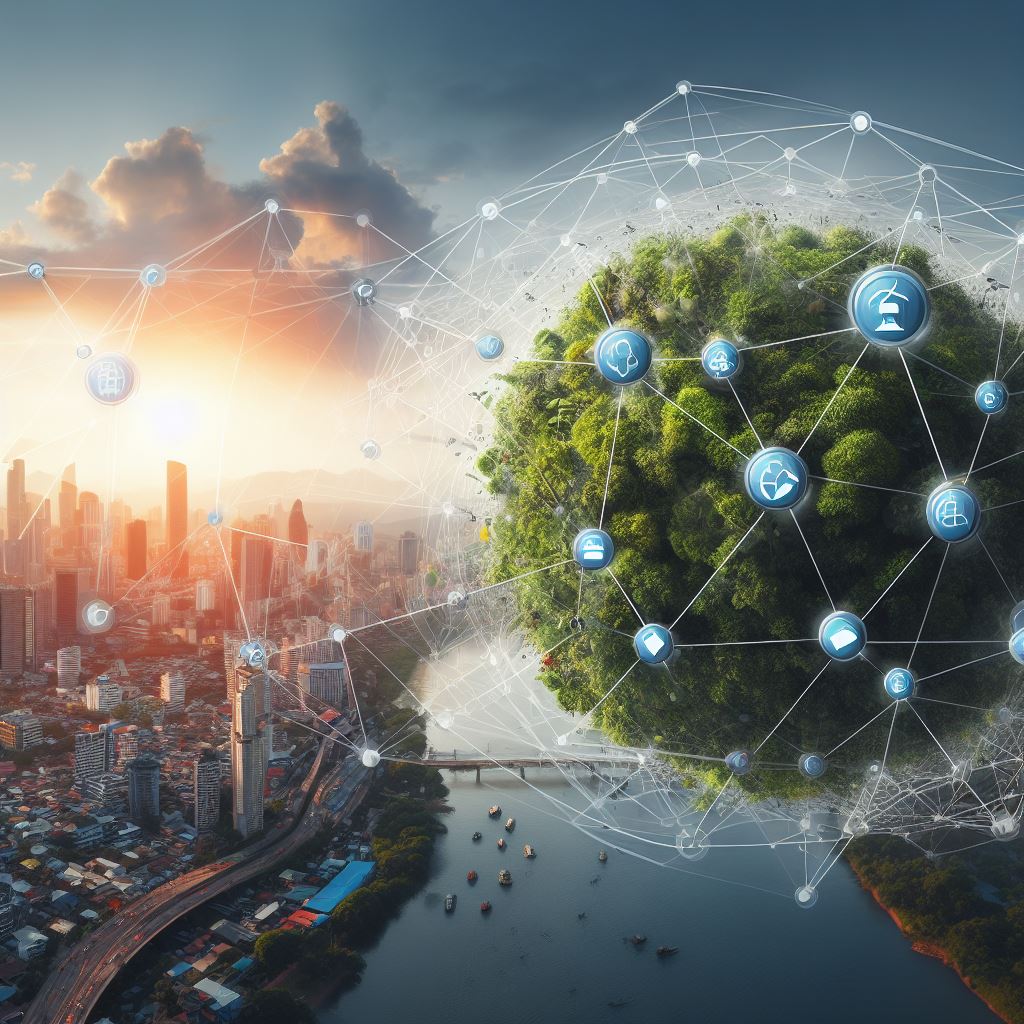
The result is that the world has effectively become a coherent system. What happens in one place quickly spreads to all the others.
A new product is launched in one country and is known throughout the world the same week. A company behaves badly and the news spreads globally in a matter of minutes.
Information now travels almost as fast as light.
When everyone knows all the markets
There is another effect of this globalization.
Everyone now knows where the resources are. Everyone knows where the markets are. Everyone knows roughly what the limitations are. Previously, a company could expand to a country where the competition had not yet discovered the market. Now almost everything is discovered at the same time.
There are fewer unknown territories. This means that the old model of constant expansion is starting to reach its limits.
We have had a period where welfare and production have been able to grow in a system that is fundamentally finite. It is not surprising that this must slow down at some point.
The growing family
To understand this better, you can think of a family.
When a family consists of two people, resources are often plentiful. The food in the refrigerator lasts a long time. The dishwasher rarely runs. One car is often enough.
When the family grows to four people, the change is noticeable. Food runs out faster. There is more laundry. The bathroom is used more.
When the family grows to eight people, everything has to be organized differently. You plan purchases more carefully. You share resources more effectively. You create routines.
If someone in the family starts to take everything for themselves, conflicts quickly arise.
The only sustainable solution is balance.
The world is currently in a similar situation.
The global family
When the world’s population and economies are interconnected, humanity becomes more like a large family than a collection of separate households. The resources are shared. The atmosphere is shared. The oceans are shared. The ecosystems are shared. If one part of the family uses too much, it affects everyone else.
The old logic of winning at someone else’s expense works less well in a system where everyone is interconnected. That is why conflicts over resources, climate and the economy have become more visible.
Looking to space
It is ot surprising that some rich people are now looking to space.
If the Earth is a closed system, expansion into space could theoretically create new resources. New materials. New energy sources. New places. It is a huge technological challenge. But the logic is clear. Expanding outwards would reduce the pressure on Earth’s resources.
But even if space is an opportunity, it will not solve everything in the foreseeable future. This means that we also have to think differently here and now.
Innovation directed inward
The old innovation logic was often about expansion. The new one needs to be more about optimization. We need to start innovating inward.
This means that resources are used smarter. That materials circulate. That waste becomes raw materials. That the same value is created with fewer resources.
Anyone who learns to make new products from garbage and residual materials suddenly has a growing market.
Anyone who can produce the same benefit with half the resources can reach more people without consuming more.
This type of innovation is not about finding new markets. It’s about using the market we already have better.
The old logic lives on
Many organizations and people still think according to the old model. Take more. Grow faster. Beat the competition. Be first. It sometimes works in the short term. But in a global system it often creates backlash.
It’s a bit like the family again. If one person always eats the last food in the fridge, the others will eventually stop cooperating.
A good family works when everyone feels that the balance is reasonable.
The same applies to negotiations. A good negotiation is not when one party takes everything. Then the other becomes dissatisfied and never wants to cooperate again. A good negotiation is when both feel that the result is reasonable.
Innovation for balance
The new innovation challenge is therefore very much about balance. Balance between resources and needs. Balance between local benefit and global impact. Balance between efficiency and resilience.
This does not mean that competition disappears. But competition is shifting.
It is no longer just about producing the most products.
It is about using resources the smartest.
The organization that can create value without consuming more resources will have a huge advantage.
Global maturity
As a family grows, it must become more organized. More thoughtful. More collaborative.
The global economy is in a similar maturation process. We are moving from a stage of expansion to a stage of optimization. From discovering new territories to managing what we already have. From winning over others to creating systems where more people can win at the same time.
A new way of thinking
This requires a different kind of innovation.
Innovation that focuses on circularity. On efficiency. On collaboration. On systems thinking. Innovation that does not just ask how we can sell more. But how we can use the world better.
When you see it that way, the global world doesn’t become a problem. It becomes an opportunity to create a more balanced and sustainable economy. Just like a big family that learns to live together. Not by someone taking everything.
But by everyone understanding that resources are shared and that the future is best built when balance works.